
Beyond the MVP: Madras Adda Fireside Chat and a Best-Practices Roadmap
Reflections on the September 2026 Madras Adda fireside chat, with a best-practices roadmap for turning an AI-built MVP into a dependable product.
TL;DR
- AI makes prototyping accessible, but a working demo does not establish production readiness.
- Match engineering depth to product risk rather than copying an enterprise checklist.
- Ask five questions about safe changes, testing, user data, predictable releases and visibility after launch.
- Give every responsibility an owner, even when one person fills several roles.
- The roadmap below is textbook best practice for typical delivery; the right steps depend on your team's current stage, so it is not suitable for every team.
Introduction
I was invited as a speaker for a fireside chat event organised at Madras Adda in September 2026. Madras Adda is a community space, workspace, and event hub located in Mylapore, Chennai. The chat was about what comes after an AI-built MVP. The question was not whether tools like Lovable, Cursor or Claude help us build faster. It was how we turn that speed into software people can depend on.
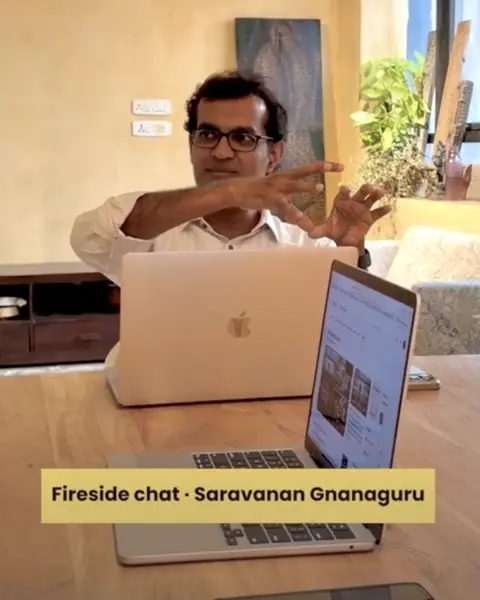
This article brings together the session's deck-based narrative and its best-practices roadmap. It is a reflection on the material prepared for the event, not a transcript or a record of attendees' remarks; no attendee quotations are reproduced here. The opening narrative describes the session format and intended exercises from that material.
At a small Madras Adda fireside chat, anchored by Yogalakshmi, seven of us spent an evening on one question: AI has made it easy to build software, so what does it take to make that software something people can depend on?
We started with the room. Each person said what they were building, who it was for, and where it was stuck. That gave us real examples to come back to, and it showed how quickly an idea can now become a working app.
Building fast is not the whole lifecycle
The first point was that AI has sharply cut the cost of creating software. What used to take a team weeks or months can take one person hours or days with a tool like Lovable, Cursor or Claude. But the lifecycle around the code is still there. Problem, scope, architecture, review, testing, security, release, deployment, monitoring and improvement are all still needed. AI can accelerate more than the Build step, including planning, review and testing. But every stage still needs human decisions and accountable ownership.
flowchart LR
  A[Problem and scope] --> B[Architecture]
  B --> C[AI-assisted build]
  C --> D[Review and testing]
  D --> E[Security and release]
  E --> F[Deploy and monitor]
  F --> G[Feedback and improvement]
  G --> A
A working MVP is not production readiness
The central distinction was between "it works" and "it's ready". A working MVP shows the idea can work. Production readiness asks whether you can safely operate and change the product for real users. Most first-time builders have the first and assume they have the second.
The conversation did not turn into a call for heavy process. We said engineering depth should follow risk. A landing page, an internal tool, a multi-user SaaS product and an AI or LLM product each need a different amount of rigour. There is no single checklist, but every product needs some answers. Those came down to five questions:
- Can I change it safely?
- Can I test it with confidence?
- Can I protect users and their data?
- Can I release and roll back predictably?
- Can I tell what's happening after go-live?
Several "no" answers means you have a working MVP, not yet a production-ready product. That isn't a failure.
Guardrails that fit the product
Along the way we covered a few specific points:
- Keep a living project context (PROJECT.md, ARCHITECTURE.md, SECURITY.md) so both teammates and AI agents know your rules.
- Test the one user journey that must never break.
- Being logged in does not mean being authorised.
- CI/CD automates a release process; it isn't the process itself.
- You don't need enterprise observability on day one, only enough to know when something is failing.
- A backup you've never restored is an assumption.
Shared responsibilities, even for a solo builder
On roles, we noted that a solo builder doesn't have solo responsibility. Product, UX, engineering, architecture, security, delivery and operations all still exist, and one person can cover several. The aim is a name next to every responsibility, even if it's the same name eight times. AI is good at generating, explaining and suggesting. Automation should run tests, scans and deployment gates. Humans should own product intent, trade-offs, risk acceptance, security decisions, production approvals and accountability.
Turning the discussion into a plan
The group then applied this to one real idea: define the product in a sentence, sketch the system, pick the top three risks, mark each Ready, Needs attention or Later, plan the release, and assign owners. The output was a best-practices roadmap:
- Stage 1: problem, scope and architecture.
- Stage 2: build, review and security basics.
- Stage 3: testing, release and deployment.
- Stage 4: real users, monitoring, feedback and improvement.
Speed and engineering discipline belong together
The closing message was balance, not a warning against AI. The talk was not against Lovable, vibe coding or speed. AI made building accessible; now engineering knowledge has to be accessible too. The advice was to prototype fast, understand the system, add the right guardrails, release deliberately, watch real users and keep improving. Don't use AI only to build faster. Use it as part of a system that helps you build, release and operate software better.
"Building fast is valuable. Building something people can depend on is the real goal."
Beyond the MVP: a best-practices roadmap for typical delivery
Disclaimer: Most of what we discussed is textbook best practice. The right steps depend on the stage your team is at today, so this roadmap is not suitable for every team. Treat it as a typical sequence for delivery beyond the MVP — skip, reorder or stretch steps to fit your product, risk and team.
flowchart TB
  S1[Stage 1: Problem, scope and architecture] --> S2[Stage 2: Build, review and security]
  S2 --> S3[Stage 3: Testing, release and deployment]
  S3 --> S4[Stage 4: Users, monitoring and improvement]
  S4 -->|Feedback| S1
This follows the deck's stage-wise template and its 8-category readiness checkpoint. Move to the next stage when the current one is good enough, not by the calendar. How deep you go in each stage should follow your product's risk. A landing page needs far less than a multi-user SaaS or an AI product.
Stage 1: Problem, scope and architecture
- Write a one-sentence product definition: what it is, who it's for, and the problem it solves.
- Name the critical user journey and what is explicitly outside MVP scope.
- Define how you'll know it worked (success criteria).
- Sketch the system on one page: user → frontend → backend/API → database, plus external services (auth, payments, AI model, email, storage).
- Mark where sensitive data lives and which dependency would stop the product if it failed.
- Done when: you can say where data lives, who can access it, and what happens when a part fails.
An illustrative system sketch makes the dependencies visible; it is not a prescription for every product.
flowchart TB
  U[User] --> F[Frontend]
  F --> A[Backend / API]
  A --> D[(Database)]
  F --> I[Identity service]
  A --> I
  A --> P[Payments]
  A --> M[AI model]
  A --> E[Email]
  A --> S[Storage]
Stage 2: Build, review and security basics
- Put the code in Git, so you can see what changed and restore the previous version.
- Add a review step, even if it's only you, or you plus an AI reviewer.
- Create a project context file (PROJECT.md, ARCHITECTURE.md, SECURITY.md) so teammates and AI agents follow your rules.
- Security basics, in this order:
- Authentication: who are you?
- Authorization: what can you do?
- Database permissions or row-level security: which data can you see?
- Secrets: keep API keys out of the code.
- Input validation and API protection.
- Try it yourself: can User A see User B's data?
- Done when: being logged in does not mean being allowed to see everything.
Stage 3: Testing, release and deployment
- Test the one journey that can't break (for a booking app: pay and get a confirmed slot).
- Add API, database, authentication, authorization and failure-path checks, plus a smoke test.
- Let AI suggest and scaffold tests, but let deterministic tests decide pass or fail.
- Write down the release path: change → review → test → security check → build → deploy → validate → observe.
- Make the deploy repeatable, with config kept separate from code and each version identifiable.
- Add CI/CD, staging or manual approval only if your risk calls for them.
- Set up a rollback and a backup, then actually restore a backup once.
- Done when: a bad release can be undone in minutes.
flowchart LR
  C[Change] --> R[Review]
  R --> T[Tests]
  T --> S[Security checks]
  S --> B[Build]
  B --> D[Deploy]
  D --> V[Validate]
  V --> O[Observe]
  V --> Q{Release healthy?}
  Q -->|No| X[Rollback and verify]
  Q -->|Yes| O
Stage 4: Real users, monitoring and improvement
- Add minimum monitoring: uptime, errors, logs, API failures, database health, response time and the deployed version.
- If the product uses AI, also watch model failures, latency, token cost and fallback behaviour.
- Decide how users report problems and who responds when it breaks.
- Collect feedback, pick the top fixes, and feed them back into Stage 1.
- Done when: you'd find out about an outage from a dashboard, not from a user complaint.
Final check: the five questions
- Can I change it safely?
- Can I test it with confidence?
- Can I protect users and data?
- Can I release and roll back predictably?
- Can I understand what's happening after go-live?
Several "no" answers means you have a working MVP, not yet a production-ready product.
Who owns what
Give every responsibility a name, even if it's the same name eight times: Product, UX, Development, Architecture, Security, Deployment, Monitoring and Support. Ask honestly who owns Security today.
The principle behind all of it: prototype fast, understand the system, add the right guardrails, release deliberately, observe real users, improve continuously.
Key Takeaways
- Treat the MVP as evidence that an idea works, not proof that it is ready for real users.
- Architecture, authorization, repeatable releases and recovery are decisions, not features AI can own for you.
- Test the critical user journey and failure paths before trusting the happy-path demo.
- A rollback plan and a tested restore are more valuable than an unverified backup.
- Keep the feedback loop running: release deliberately, observe real usage and improve continuously.
References
The event narrative and best-practices roadmap above are based on the supplied Madras Adda session materials. These external references support the engineering practices; they are not sources for what attendees said.
- OWASP Application Security Verification Standard — requirements for assessing application security controls.
- OWASP Authorization Cheat Sheet — separating identity checks from access decisions.
- Google SRE: Monitoring Distributed Systems — monitoring and operational signals.
- NIST Secure Software Development Framework — secure development practices across the software lifecycle.
Related Reading
Ask AI About the Author
Open this query in ChatGPT, Claude, or Perplexity.
Comments
Comments are open to confirmed email subscribers. Use the email you subscribed with. To edit a comment, delete it and post a new one.
Subscribe to get the new blogs.
Field notes from someone who ships before they write about it. Sovereign AI, AI-SDLC, DevOps, and what 59 production deployments teach you. No spam. Unsubscribe anytime.